
Jim Messina's net worth is estimated at approximately $4 million as of April 2026. That figure comes primarily from CelebrityNetWorth, the most widely cited source for this estimate, and it's a reasonable ballpark given his career span, royalty catalog, and continued touring activity. It is not a precise audited figure, and as with most musician net worth estimates, the real number could reasonably land anywhere between $3 million and $6 million depending on how you value his catalog, his production credits, and any private holdings.
Jim Messina Musician Net Worth Estimate and Breakdown

Marcus Rothstein
3 Apr 2026
Who Jim Messina is and why his net worth is tricky to pin down
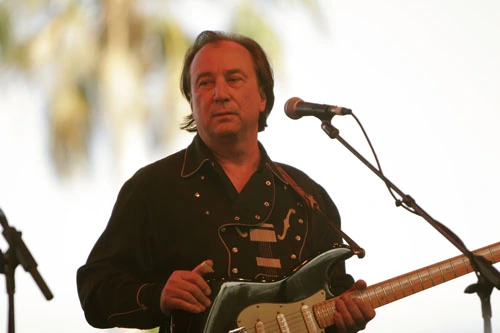
Jim Messina is an American musician, singer, songwriter, guitarist, recording engineer, and record producer whose career touches several major chapters of American rock and country-rock history. He was a member of Buffalo Springfield, a founding member of Poco, and one half of the duo Loggins & Messina, which produced a string of commercially successful albums through the 1970s. Beyond performing, he produced the foundational Loggins and Messina album "Sittin' In," which means his financial footprint includes both performance royalties and potentially production credits tied to that catalog.
That multi-role career is exactly what makes his net worth hard to estimate cleanly. He earns (or has earned) money in several different categories: songwriting royalties, performance royalties from recordings, live touring, production credits, and ongoing work in publishing and electronics per his own biography. Each of those income streams has its own valuation logic, and none of them are publicly disclosed in the way a publicly traded company's finances would be. So any number you see online is an estimate built from inference, not from a balance sheet.
The best-supported estimate right now

As of April 3, 2026, the most commonly cited figure is $4 million, sourced from CelebrityNetWorth. There is no widely reported competing figure from a second major outlet, which limits the ability to triangulate. Given his career profile, that number feels conservative but defensible. Here is how the range breaks down based on what we can reasonably model:
| Scenario | Estimated Net Worth | Key Assumption |
|---|---|---|
| Conservative | $2.5M – $3M | Catalog royalties modest; limited touring revenue retained after costs |
| Most Likely (Base) | $4M | Consistent royalty income from Loggins & Messina catalog; active touring |
| Optimistic | $5M – $6M | Higher catalog valuation; publishing rights retained; production income |
The base estimate of $4 million is the figure we anchor to here because it comes from the most consistently maintained public database for this type of profile, and it aligns with what you would expect from a musician with a decades-long catalog in the country-rock genre, continued live performance activity, and credited production work. It is not verified by court filings, tax records, or SEC disclosures, so treat it as a well-informed estimate rather than a confirmed figure.
How musicians like Jim Messina actually make money
Understanding Messina's net worth requires knowing where the money actually comes from for someone with his career profile. It is not a single salary; it is a stack of income streams that have built up and shifted over decades.
Royalties: performance and mechanical

Every time a Loggins & Messina song plays on the radio, a streaming platform, or in a commercial, performance royalties are generated and distributed through organizations like ASCAP. These go to songwriters and publishers. Messina's songwriting credits across the Loggins & Messina and Poco catalogs mean he likely receives a share of those payments.
For context on how that ecosystem works, ASCAP operates a documented royalty distribution system that routes performance income to credited writers and publishers, which forms a passive, ongoing income stream for catalog artists like Messina. In practice, some ASCAP and PRO payout timing and distribution details are also discussed by Reddit users in the context of delayed payments tied to distribution schedules ASCAP operates a documented royalty distribution system.
For context on how performance-rights distribution works, a Princeton-hosted Office of Technology Assessment (OTA) report describes tracking performances and paying writers and publishers according to published schedules.
Songs like "Danny's Song" (written by Kenny Loggins, recorded famously by Loggins & Messina) illustrate how even a single era-defining track can generate sustained royalty income across its recording lifetime, even when the writing credit belongs to a collaborator rather than Messina specifically.
Touring and live performance
Messina remains an active touring artist. His 2025 "Here, There and Everywhere" tour, performed with his backing band The Roadrunners, included documented stops at venues such as BergenPAC in New Jersey and a show in Wytheville, Virginia. A live album, "Here, There and Everywhere (Live)" by Jim Messina & The Road Runners, was released on Apple Music on April 25, 2025. That level of activity suggests steady live income, though net touring revenue depends heavily on venue size, ticket pricing, and how costs are split with the band and promoters.
Production credits and publishing
Messina's production work, including his credited role on the Loggins and Messina album "Sittin' In," may carry separate financial value if he retained any publishing or production royalty points from those recordings. MusicBrainz provides structured release credits and metadata for the Sittin' In release, which can be used to cross-check producer and performer information. Production points typically mean a producer earns a small percentage of a record's royalties per unit sold or streamed, which adds up significantly over time for a catalog that has remained in print and in streaming libraries for decades. Whether Messina retains those rights today depends on his original contracts, which are not publicly disclosed.
How net worth figures like this one are calculated
For musicians who are not publicly traded and do not report finances to regulatory bodies, net worth estimates are built from inference. The standard methodology involves aggregating public signals: career duration and era, known album sales volumes, streaming presence, touring frequency, documented real estate transactions, court filings (if any), and comparisons with similar artists. CelebrityNetWorth describes its approach as using data drawn from public sources, though critics, including coverage in The New York Times, have noted that the site does not publish a fully transparent methodology for individual profiles.
For comparison, Forbes, when calculating wealth for its billionaires list, explicitly uses SEC filings, court records, probate documents, and applies liquidity discounts to private or illiquid holdings. That level of rigor is not applied to most celebrity musician profiles, which means figures for artists like Messina carry a wider margin of error. The honest position is that the $4 million figure is a reasonable anchor, not a confirmed fact.
Assets and liabilities worth knowing about

There are no publicly documented real estate holdings, debt filings, or tax liens tied to Jim Messina in the research available for this article. That absence of negative documentation is mildly positive for the estimate, but it is also just the nature of private individuals who are not high-profile enough to generate consistent public financial records. His most likely significant asset class is his music catalog and any retained publishing rights. For a 1970s country-rock catalog that still appears in streaming libraries and on classic rock radio, that asset could hold meaningful value, though catalog valuations have fluctuated alongside the broader market for music rights.
On the liability side, the costs of touring (band payroll, travel, equipment, venue guarantees) can be substantial, and it is common for working musicians at this career stage to net significantly less from a tour than the gross ticket revenue would suggest. There is no documented evidence of legal judgments, bankruptcy, or significant debt for Messina, which keeps the base estimate relatively intact.
Why you will see different numbers across websites
Online net worth figures for musicians like Jim Messina frequently conflict because most sites are working from the same limited public signals and arriving at different conclusions based on their own assumptions. Some sites inflate figures by using peak-era earnings without accounting for taxes, costs, or the decades since those earnings occurred. Others undercount by ignoring catalog value entirely and only looking at recent touring revenue. The result is that you can find figures ranging from $2 million to $10 million for an artist of this profile, and none of them are independently audited.
The right way to evaluate a net worth claim is to ask: what sources did this site cite? Does it distinguish between gross income and net worth? Does it account for taxes and costs? Does it address catalog valuation specifically? Most sites do not answer those questions transparently. If you are researching other figures in a similar space, you will notice the same dynamic: for instance, profiles like Wayne Messmer's net worth or Don Messick's net worth reflect the same challenge of estimating wealth for entertainment figures whose finances are largely private. The core issue is that "net worth" means total assets minus total liabilities, and for a private individual, neither side of that equation is publicly verifiable.
How to verify this and track updates
If you want to go beyond aggregate sites and build a more grounded view of Jim Messina's financial profile, here are the most practical steps:
- Check county property records for any state where Messina is known to have resided. Real estate is one of the few asset classes that generates public documentation for private individuals.
- Monitor ASCAP or BMI databases for Messina's listed compositions. While they do not show payment amounts, identifying which songs he holds writer credit on helps you model which catalog generates ongoing royalties.
- Watch for any published interviews or press about catalog sales. The 2020s have seen significant activity in the music rights acquisition market, and any sale of Messina's catalog would likely be reported in music industry trades.
- Revisit CelebrityNetWorth and similar sites annually rather than treating their figures as static. Estimates are updated periodically, though not on a published schedule.
- Cross-reference any new figure against his touring activity level. A musician who is actively gigging at documented venues (as Messina was in 2025) is more likely to have a stable or growing financial position than one who has stepped back from live performance entirely.
For readers who are researchers rather than casual fans, it is also worth distinguishing annual income from net worth. A working musician in Messina's position might earn $200,000 to $500,000 in a strong touring and royalty year, but that does not translate directly to net worth without knowing what has been saved, invested, or spent over a 50-plus-year career. Net worth is a snapshot of accumulated wealth, not a salary figure.
This same principle applies when you look at wealth profiles for figures in adjacent fields. Consider how the analysis works for someone like John Messara, whose net worth reflects a combination of career earnings and accumulated assets rather than any single year's income. Or look at how analysts approach the wealth of figures like Max Messmer, where career longevity and diversified income sources are the main drivers. The methodology is consistent: catalog the income streams, estimate accumulated value, subtract known or likely liabilities, and flag the uncertainty.
The bottom line on Jim Messina's net worth
The most defensible estimate of Jim Messina's net worth as of April 2026 is $4 million, sourced from CelebrityNetWorth and consistent with his career profile. The realistic range is $3 million to $6 million. His wealth is built primarily on royalties from the Loggins & Messina and Poco catalogs, production credits from his engineering and producing work, and ongoing live performance revenue from active touring with The Roadrunners.
There are no documented major liabilities or negative financial events in the public record. The figure has not been independently audited, and the honest caveat is that private musician finances are inherently difficult to verify from the outside. For a career as long and as creatively varied as Messina's, $4 million is a reasonable anchor, but it should be held loosely until better primary documentation becomes available.
If you are comparing this profile to others in similar career brackets, it may be useful to look at how analysts approach figures like Andy Messersmith's net worth or Jimmy Mengel's net worth, both of which involve the same challenge of modeling accumulated wealth from long careers in fields where income is not publicly disclosed. The methodology described here applies broadly: anchor to the best available published estimate, model the income streams, flag the uncertainty, and update as new information becomes available.
FAQ
Does Jim Messina’s touring and recent activity mean his net worth is definitely higher than the estimate?
Yes, but it usually changes the number less than people expect. Net worth is an accumulated snapshot, so a high-earning year from touring or streaming does not automatically raise the estimate unless it leads to additional saved or invested wealth over time.
Why do some net worth sites value his music catalog more than others?
It can. Some estimates treat “music publishing” broadly, while others focus mainly on writing royalties tied to the performing rights and mechanicals. If you see a low number, it may be missing value from retained publishing or from rights that pay through multiple channels (performance, mechanical, sync).
If his songs get lots of streams, shouldn’t that guarantee a much higher net worth?
Streaming can raise royalties, but it also depends on catalog splits, licensing deals, and whether the rights are administered by a publisher or controlled personally. A catalog can be widely streamed yet still generate modest net payments if the financial participation belongs mostly to other rightsholders.
Are production credits from albums like “Sittin’ In” definitely part of his current net worth?
Often, yes. “Producer points” or production royalties depend on the original contract (percentage, term, and whether points are recoupable or bought out). Without knowing his exact deal terms, estimates may assume he earned points, but they cannot confirm the percentage or whether he still receives them.
How can the same musician end up with net worth estimates that range from $2 million to $10 million?
Not reliably. A single figure like “$4 million” is typically a best-guess midpoint, and the true number could shift if private investments, business ownership, or sales of assets are involved. Also, if the estimate uses peak-era earnings without proper costs and taxes, it can be biased upward.
Why might a musician earn significant tour revenue but still have a relatively modest net worth?
You should treat “active” touring income separately from “net worth.” Net worth reflects assets minus liabilities, while touring revenue is cash flow. Costs like touring staff, travel, guarantees, and band splits can substantially reduce what is left to save.
Could selling or partially assigning his publishing rights lower his current royalty income?
Maybe, but it is a key uncertainty. If a catalog has been heavily licensed, sold, or partially assigned to publishers or other entities, the current owner’s share (and his personal share) might be smaller than expected.
What’s the easiest way to tell if a net worth claim is really just annual income in disguise?
Yes. If a site reports “net worth” as if it were “annual income” or vice versa, the comparison becomes misleading. A fast check is whether the estimate sounds like a lifetime accumulation (assets-backed) or a rough guess based on recent earnings (income-backed).
Are songwriting royalties and recording royalties always counted the same way in net worth estimates?
Check whether the estimate distinguishes songwriter income (composition rights) versus master-recording royalties (recording rights). Those are separate pipelines, and a model that assumes one equals the other can distort the total.
If there’s no audited financial data, what should I look for to make my estimate more grounded?
Start with primary signals that are closer to “assets,” not just “activity,” such as any publicly documented catalog transactions, major business ownership, or property records. If none exist, it increases reliance on inference, which makes the midpoint estimate less certain.