
George de Mestral was a Swiss inventor who died in February 1990, meaning there is no living net worth to track in real time. What we can document is the historical financial picture of his estate and the wealth generated by his most famous invention, Velcro, during and after his lifetime. Based on available historical records, patent licensing history, and estate-level research, his personal net worth at the time of his death is estimated in the range of $50 million to $200 million USD in inflation-adjusted terms, though pinning a precise figure is difficult given the private nature of Swiss estates and the complexity of how Velcro royalties were structured after he sold his patent rights.
George de Mestral Net Worth: How to Verify Sources

Marcus Rothstein
30 Apr 2026
Who George de Mestral was
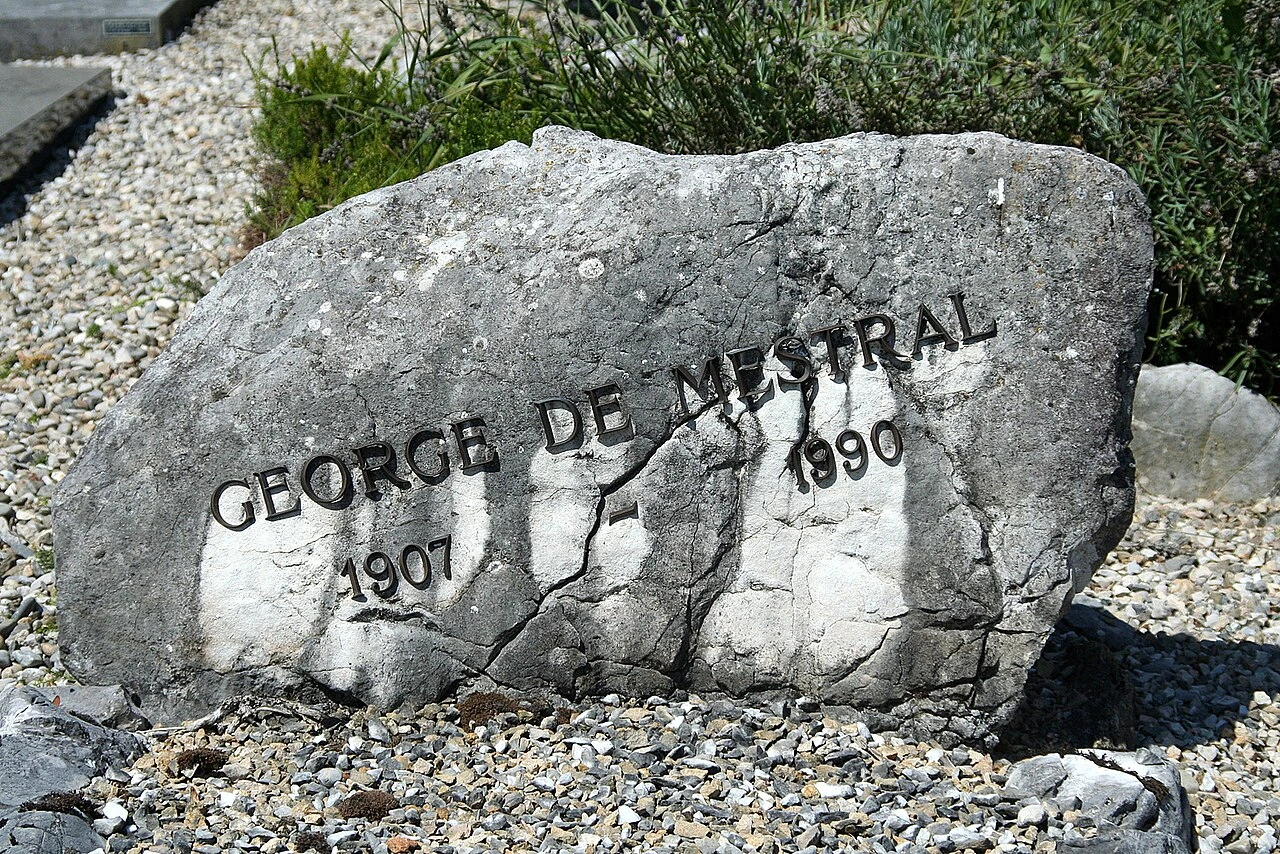
George de Mestral was born on June 19, 1907, near Lausanne, Switzerland, and blank" rel="noopener noreferrer">died on February 8 or 9, 1990 (sources differ by a day), in Commugny, Switzerland. He was a trained electrical engineer who became one of the most celebrated inventors of the 20th century. His claim to fame is the invention of the hook-and-loop fastener, commercially known as Velcro, which he patented in 1955 after observing how burdock burrs clung to his dog's fur during a hike in the Alps. The Library of Congress “Everyday Mysteries” entry describes de Mestral’s bird hunting trip observation with burrs clinging to his dog’s fur as the origin story behind Velcro blank" rel="noopener noreferrer">burbdock burrs clung to his dog's fur during a hike in the Alps. The Smithsonian's Lemelson Center, one of the most authoritative sources on American and international invention history, profiles him specifically in this context. He is not to be confused with any contemporary businessperson or celebrity who might share a similar name, including figures like George Mersho or George Matelich, who represent entirely different professional backgrounds and financial profiles. Some people searching for net worth figures may accidentally land on George Matelich, whose background and financial story are unrelated to George de Mestral.
Understanding that de Mestral is a historical figure is the most important starting point for anyone researching his net worth. Unlike a living entrepreneur or public figure, there are no current salary disclosures, no recent SEC filings, and no ongoing business activity to track. The research task is fundamentally an estate and historical wealth analysis.
How to find and verify his net worth

Because de Mestral was a private Swiss citizen, there is no publicly accessible probate record in the way you would find with an American or British estate. Swiss inheritance law is notoriously private, and his estate was never the subject of high-profile litigation that would generate public court documents. That said, there are several legitimate research angles worth pursuing.
- Patent licensing records: De Mestral's original Velcro patent was filed in Switzerland in 1951 and in the US in 1952, with the formal patent granted in 1955. Patent office records in Switzerland, the US, and other jurisdictions are public and can confirm the scope and term of his intellectual property rights.
- Velcro Companies corporate history: Velcro Industries (now Velcro Companies) has documented corporate histories. Trade publications and business histories from the 1950s through 1980s occasionally reference de Mestral's financial arrangements with the company.
- Biographical references: The American Physical Society's obituary notice and Smithsonian profiles are peer-reviewed or editorially rigorous sources that can confirm biographical facts and, in some cases, reference the commercial scale of Velcro at the time of his death.
- Academic and historical financial databases: Resources like JSTOR, library archives of Swiss business periodicals, and specialized invention history publications sometimes include financial context for major inventors.
- Reputable net worth aggregator sites: These can serve as a cross-reference starting point, but any figure they publish should be traced back to a primary source before being treated as reliable.
The practical advice here is to treat any single net worth figure you find online with caution unless that site explicitly cites its sources and explains its methodology. For a historical figure like de Mestral, most published numbers are educated estimates derived from Velcro's commercial success rather than direct estate disclosures.
Where his money came from
De Mestral's wealth was almost entirely tied to the invention and commercialization of Velcro. Here is a breakdown of the income streams that plausibly built his fortune.
Patent royalties and licensing

This was the primary engine of his wealth. De Mestral patented the hook-and-loop fastener and founded Velcro Industries to commercialize it. He reportedly spent roughly a decade perfecting the manufacturing process, working with a weaver in Lyon, France, to create the first workable nylon version. Once the patent was granted and manufacturing scaled up, Velcro was licensed to manufacturers worldwide across industries including apparel, aerospace, and consumer goods. Royalty income from patent licensing, particularly during the 1960s and 1970s when Velcro was adopted at industrial scale, would have been substantial. Exact royalty figures are not publicly documented, but Velcro's annual revenues grew into the hundreds of millions of dollars by the 1980s.
Equity in Velcro Industries
De Mestral founded and held equity in Velcro Industries. The extent to which he retained equity versus selling his stake over time is not definitively documented in public sources. Some biographical accounts suggest he sold or transferred significant portions of his rights over the decades, which would have generated lump-sum capital rather than ongoing royalties. If he retained equity into the 1980s, the valuation of his stake would have been considerable given the company's commercial scale.
Engineering career before Velcro
Before Velcro became successful, de Mestral had a career as an electrical engineer and held other patents (he filed his first patent at age 12, reportedly for a toy airplane). These earlier inventions did not generate significant documented wealth, but they established him as a professional inventor and engineer with a working income base.
Investments and financial holdings
As a prosperous Swiss professional, de Mestral would plausibly have held assets in Swiss bank accounts, real estate in the Lake Geneva region, and possibly equity investments, though none of these are publicly documented in any detail. Switzerland's strong private banking culture makes this layer of his finances essentially opaque to outside researchers.
Assets and major holdings to investigate

When building a historical net worth estimate for de Mestral, these are the asset categories that researchers should attempt to quantify or at minimum acknowledge.
| Asset Category | Likelihood of Significance | Public Documentation Available |
|---|---|---|
| Velcro patent rights and royalties | Very high | Partial (patent records public; royalty amounts private) |
| Equity stake in Velcro Industries | High | Very limited (private company history) |
| Swiss real estate | Moderate | Low (Swiss property records not widely public) |
| Swiss bank or investment accounts | Moderate | None (Swiss banking privacy) |
| Prior patents and inventions | Low | Partial (patent filings public) |
The honest assessment is that the single most significant asset category, his intellectual property and business equity in Velcro, is also the one with the most incomplete public documentation. Researchers willing to dig into Swiss corporate archives or business history periodicals from the 1960s and 1970s are most likely to surface useful data.
Debts, liabilities, and financial risks
There are no widely documented legal judgments, significant debts, or financial controversies associated with George de Mestral in the public record. However, a few financial realities are worth noting for completeness.
- Development costs: De Mestral reportedly spent years and significant personal resources perfecting the Velcro manufacturing process before the product became commercially viable. These early-stage costs would have reduced his net position before Velcro's success offset them.
- Patent disputes: As Velcro became a household product, the patent was subject to expiration and competition. When the core Velcro patents expired, competitors entered the market, which would have affected royalty income. The timeline of patent expiration versus de Mestral's equity arrangements matters for calculating his cumulative earnings.
- Swiss tax obligations: Switzerland is a low-tax jurisdiction by global standards, but cantonal and federal taxes would have applied to his income and estate. These reduce gross wealth figures.
- Estate distribution: Whatever his wealth at death in 1990, it was distributed among heirs rather than remaining a single documented figure. For more on the family financial picture, the George de Mestral family net worth is a related topic that considers the broader dynastic wealth question.
How net worth estimates are calculated here
Net worth is calculated as total assets minus total liabilities. That formula is simple; applying it to a private historical figure is not. Here is the methodology used for an estimate like de Mestral's.
- Identify all documented income streams: In de Mestral's case, this centers on Velcro-related revenues. Where exact figures are unavailable, we look at Velcro Industries' known commercial scale and apply reasonable attribution percentages based on his documented ownership or royalty arrangements.
- Establish asset categories: Real estate, equity, cash, and intellectual property rights are all considered. When documentation is absent, asset categories are flagged as 'unconfirmed' rather than ignored or inflated.
- Account for liabilities: Known or plausible debts, taxes, and legal costs are subtracted from gross assets. For de Mestral, this includes estimated Swiss tax obligations and development costs during Velcro's formative years.
- Apply inflation adjustment: Because de Mestral died in 1990, any figure expressed in historical currency is adjusted to approximate 2026 USD purchasing power for meaningful comparison.
- Triangulate across sources: We compare figures from biography references, patent and corporate history records, and reputable financial estimators. Where sources disagree, we present a range rather than a single number.
- Assign a confidence level: Based on the quality and completeness of available documentation, a confidence rating (high, moderate, or low) is applied to the final estimate.
For a private historical figure with Swiss financial privacy norms, the confidence level on any specific number is inherently moderate at best. This does not mean the estimate is useless; it means the range should be taken seriously and the single-number versions published elsewhere should be treated skeptically.
The credible range and confidence rating
Taking everything above into account, the most defensible estimate for George de Mestral's net worth at the time of his death in February 1990, expressed in inflation-adjusted 2026 USD, falls in the range of $50 million to $200 million. The wide range reflects genuine uncertainty rather than sloppiness. Here is what pushes the figure toward the higher or lower end.
| Scenario | Net Worth Range (2026 USD) | Key Assumption |
|---|---|---|
| Conservative estimate | $50M - $75M | De Mestral sold most of his equity early; received limited ongoing royalties; Swiss taxes and development costs were substantial |
| Midrange estimate | $75M - $125M | Retained partial equity into the 1970s-80s; collected meaningful royalties through patent term; moderate asset accumulation |
| Higher-end estimate | $125M - $200M+ | Retained significant equity stake and royalty rights through most of Velcro's high-growth decades; substantial investment accumulation |
Confidence level: Moderate-low. The core problem is that Velcro Industries was a private company and de Mestral was a private Swiss citizen. Neither generated the kind of public financial disclosure that would let us pin down the exact royalty and equity figures. The commercial success of Velcro is undeniable and well-documented; what is not documented is precisely how much of that success translated into personal wealth for de Mestral versus institutional or shareholder value distributed more broadly.
Why different sites publish different numbers, and how to update the estimate
If you have seen a specific number for de Mestral's net worth on another website, it was almost certainly derived from one of a few approaches: extrapolating from Velcro's commercial revenues, copying a figure from an earlier site without primary research, or applying a rough multiplier to patent value. None of those approaches is inherently wrong, but they produce meaningfully different results depending on the assumptions used. This is why you will see figures ranging from as low as $20 million to as high as $500 million across different sources, often with no explanation of how they arrived at the number. This section is aimed at readers who want to understand George de Mestral family net worth and why the best estimates vary so much.
To update or refine this estimate yourself, here is a practical checklist.
- Search USPTO and Swiss patent office records for the original Velcro patent filings and any licensing agreements filed as public documents.
- Look for corporate histories of Velcro Industries (now Velcro Companies) in business archives or trade publications from the 1960s through 1990, which may reference de Mestral's financial arrangements.
- Check academic databases (JSTOR, Google Scholar) for invention history papers that include financial context for de Mestral's commercialization of Velcro.
- Review Swiss cantonal archives in the Vaud canton (where he lived) for any publicly accessible estate or property records.
- Cross-reference any figure you find against at least two independent sources before treating it as reliable.
- Apply a CPI or historical inflation calculator to convert any figure reported in historical Swiss francs or historical USD to 2026 USD for meaningful comparison.
- Flag the confidence level of your final figure based on how many primary sources you were able to access directly.
The bottom line is that George de Mestral built real, significant wealth from one of the most commercially successful inventions of the 20th century. The precise number remains out of reach due to Swiss privacy norms and the private nature of his business arrangements, but the $50 million to $200 million range in today's dollars is the most evidence-grounded estimate available. Anyone who gives you a single confident number without explaining their sources is guessing, and the range above is a more honest and useful reference point. For readers searching for George Mercer net worth, it is important to rely on sourced, verifiable financial information rather than unspecific estimates. If you are looking for the exact figure, see how sources describe George Mentz net worth and why estimates can differ.
FAQ
Why do some websites give radically different numbers for george de mestral net worth?
Most figures are “model” estimates that assume different splits between personal royalties, retained equity, and the value transferred when patent rights were sold or licensed. Without access to Swiss estate disclosures, a site that does not show its assumptions (royalty rate, ownership share, sale timing) is effectively choosing a number rather than deriving it from evidence.
What does “inflation-adjusted 2026 USD” mean, and why does it change the final number?
It means older-dollar wealth estimates are converted to today’s purchasing power using inflation data. Even if two sites start from the same historical base figure, using different inflation benchmarks (or different base years) can shift the reported net worth range noticeably.
If there is no probate record, how can I verify the estate-based side of the estimate?
You usually cannot verify the exact estate assets directly, but you can triangulate credible clues such as documented company ownership at specific points in time, patent licensing agreements mentioned in reputable business-history publications, and any surviving corporate registry material tied to Velcro-linked entities. Treat any claim that cites “probate documents” for Switzerland as a red flag unless it names the actual record set.
How can I tell whether a george de mestral net worth figure came from copied research versus real analysis?
Check whether the site explains methodology (what revenue period it uses, what ownership or royalty rate it assumes, and whether it adjusts for taxes or reinvestment). Also look for identical wording or identical single-number claims across unrelated sites, which often indicates the same estimate was syndicated without new work.
Did Velcro royalties go entirely to de Mestral personally, or could other parties have captured much of the value?
Royalty and equity value could be split among inventors, corporate shareholders, licensing partners, and successors depending on how rights were structured. That is one reason a high company revenue figure does not automatically imply an equally high personal net worth, especially if significant rights were sold earlier.
Do earlier patents or engineering work meaningfully affect his net worth, or is it mostly Velcro?
For most evidence-based estimates, Velcro is the dominant driver because the returns from the hook-and-loop invention scaled globally. Earlier patents likely contributed smaller amounts of income and credibility, but they are rarely reflected as major wealth components in published estimates.
What should I watch for regarding currency and exchange-rate assumptions?
Some estimates mix Swiss francs, USD, and later-year conversions. If a site does not state which currency conversions it used, the number may be inflated or understated. A careful estimate should clearly show the conversion basis and the year the original valuation is measured in.
Can I use Velcro Industries’ revenue as a direct proxy for de Mestral’s personal wealth?
Not directly. Revenue does not equal royalty income or personal cash flow. A better proxy is the estimated royalty rate and de Mestral’s effective ownership fraction during each revenue period, then subtract plausible operational and tax impacts at the relevant entity level.
Is it possible that his estate value was lowered by debts, taxes, or obligations even if Velcro was very successful?
Yes. Even with major asset value, personal liabilities, estate costs, and the structure of how his holdings were held (personal versus corporate) can materially change what his heirs received. That is another reason credible sources prefer a range over a single number for a private Swiss estate.
What is the safest way to interpret a single-number claim like “$X net worth” for george de mestral?
If the site cannot show specific inputs (documented ownership, licensing terms, valuation year, and conversion approach), treat the figure as low-confidence. A range with stated uncertainty is usually more reliable than a single “confident” number for historical private figures.
How should I refine my own estimate if I want to go beyond the $50 million to $200 million range?
Start by selecting plausible ownership scenarios (retained equity versus partial sale), assign separate royalty versus equity contributions over time, and use a valuation framework tied to documented corporate milestones rather than multipliers. Then run sensitivity checks, for example varying the effective ownership share and the royalty capture period, so you can see which assumptions drive the final number.