When people search 'Murakami net worth,' they almost always mean Takashi Murakami, the Japanese contemporary artist whose work spans fine art, fashion collaborations, animation, and merchandising. The most widely cited estimate puts his net worth at around $100 million as of 2020, making him one of the wealthiest working artists in the world. That figure comes with real caveats worth understanding, but it is the best-supported number available from public sources.
Murakami Net Worth: How to Estimate and Verify Wealth

Marcus Rothstein
1 May 2026
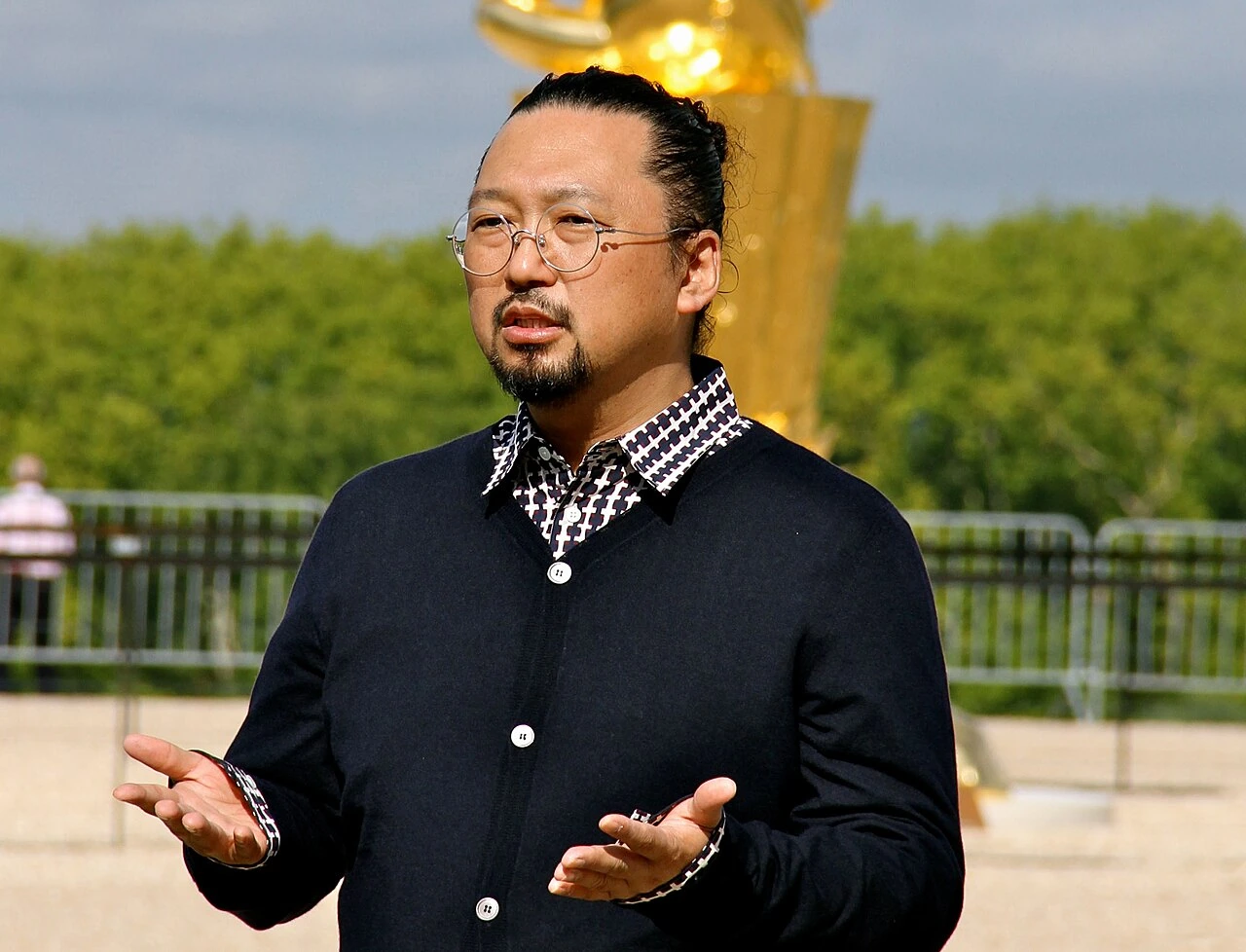
Which Murakami are we talking about?
Murakami is a common Japanese surname, and a few notable people share it. The most frequently confused are Takashi Murakami (the visual artist) and Haruki Murakami (the novelist behind 'Norwegian Wood' and 'Kafka on the Shore'). If you landed here while researching the novelist, his estimated net worth is a separate topic entirely, rooted in book royalties and publishing rather than the art market. Kentaro Miura, the manga artist, is another name that sometimes surfaces in similar searches, though he is a distinct figure. Kentaro Miura net worth is a separate topic, but it often comes up alongside Murakami because both names appear in similar wealth-search queries. Morgan Ketzner net worth is a different figure and can be hard to verify because financial details are often limited.
For the vast majority of 'Murakami net worth' searches, Takashi Murakami is the intended subject, and all figures and analysis in this article refer to him specifically. His commercial scale, his business entity (Kaikai Kiki Co. Kaikai Kiki’s official site describes Kaikai Kiki Co., Ltd. as a general art trading company and lists its business activities, including art production, film and animation, artist management, and gallery operations. , Ltd.), and his mainstream crossover visibility make him by far the most financially documented person with that surname.
Best net worth estimate and what we know as of 2025-2026
The figure most consistently cited in reference material is approximately $100 million USD, with Wikipedia anchoring that estimate to 2020. As of May 2026, no major outlet has published a formally revised figure, but the underlying business conditions (continued auction activity, a high-profile Louis Vuitton collaboration relaunch in January 2025, and an MLB merchandise collaboration tied to the Tokyo Series in March 2025) suggest the estimate has not declined significantly. A reasonable working range for 2025-2026 is $100 million to $150 million, with $100 million as the conservative floor supported by public sources and the higher end reflecting appreciation in his primary market assets and continued licensing income. Treat both ends as estimates rather than audited figures.
The evidence behind the estimate
No single public document lays out Takashi Murakami's personal balance sheet, so the $100 million estimate is built from multiple data points rather than a disclosed filing. Here is what the available evidence actually shows: Wikipedia reports that the sculpture My Lonesome Cowboy sold at Sotheby’s in 2008 for USD $15.1 million, nearly four times its pre-sale estimate.
- Auction records: Murakami's secondary market prices are well-documented. His sculpture 'My Lonesome Cowboy' sold at Sotheby's New York in May 2008 for approximately $15.1 million, nearly four times its pre-sale estimate. A Buddha-themed work reportedly sold for $8 million around Art Basel in June 2008. These are realized prices, not estimates, and they establish a high-value market for his work.
- Wikipedia's net worth citation: The English Wikipedia entry for Takashi Murakami states 'as of 2020, Murakami's net worth is estimated to be around US$100 million.' This is the most widely reproduced figure but does not come with a detailed calculation methodology on the page itself.
- Business entity scope: Kaikai Kiki Co., Ltd., founded in 2001, is described on its official site as a general art trading company with activities spanning art production, film and animation production, artist management, gallery and café management, game development, e-commerce, publishing, and merchandising. The breadth of operations supports a net worth estimate well above what art sales alone would suggest.
- Licensing revenues: The Louis Vuitton collaboration, dating to 2002, has been called by TIME the source of 'what may just be the best-selling handbag of all time.' In 2025 the collaboration was relaunched and demand indicators spiked again, per the Los Angeles Times. Licensing deals of this scale generate royalties that persist well beyond the original campaign.
- Gallery operations: Kaikai Kiki Gallery opened in Tokyo in March 2008, per Art Basel's institutional records and Tokyo Art Beat, adding a physical asset and ongoing operational revenue stream to the Kaikai Kiki group.
Auction result aggregators like Artsy and MutualArt maintain searchable databases of Murakami's realized prices, and those are the most reliable tools for tracking how his primary and secondary market values are trending in real time.
How Murakami generates and holds wealth
Takashi Murakami's wealth is genuinely diversified across multiple income and asset types, which is part of why his net worth estimate is higher than most studio artists of similar critical recognition. For a separate figure tailored to Alex Meshkin specifically, look for updated reporting on his net worth as well net worth estimate. For a broader look at Mel Karmazin net worth, it helps to separate media, sports, and investment income streams from his overall business holdings. The breakdown below reflects what is publicly documented or credibly inferred from his business structure.
| Income / Asset Stream | Evidence Basis | Confidence Level |
|---|---|---|
| Primary art sales (paintings, sculptures) | Auction records at Sotheby's, Christie's, and others; works routinely achieve six to eight figures at auction | High |
| Licensing and brand collaborations (Louis Vuitton, MLB, others) | Forbes (2018), AP (2025), LA Times (2025), TIME (2003); multiple documented deals spanning 20+ years | High |
| Kaikai Kiki Co., Ltd. business income | Official Kaikai Kiki site; includes gallery operations, artist management, e-commerce, publishing, merchandising | Medium (no revenue disclosures) |
| Film and animation production | Kaikai Kiki official site lists this as a core business activity; specific revenues not publicly disclosed | Low (activity confirmed, income unquantified) |
| Prints and editions (merchandise) | Kaikai Kiki site explicitly lists merchandising; consumer products widely available commercially | Medium |
| Real estate and investments | Not publicly documented; standard assumption in net worth modeling for individuals at this wealth level | Low (inferred, not confirmed) |
The Louis Vuitton relationship alone is a landmark case study in artist licensing. When a collaboration is described as producing potentially the best-selling luxury handbag of a generation, the royalty income and brand equity that flows to the artist can be substantial over decades. The 2025 relaunch demonstrates that this income stream is still active, not historical.
Why different sites report different numbers
If you have searched around before landing here, you have probably seen figures ranging from $50 million to $200 million or more. If you meant Gary M. Kusin instead, his net worth is covered separately and can be estimated from different kinds of public financial signals gary m kusin net worth. That spread is normal for any artist-entrepreneur whose finances are largely private, and it comes down to a few structural reasons.
- No public filing obligation: Kaikai Kiki Co., Ltd. is a private Japanese company. There is no required public disclosure of revenues, profits, or Murakami's personal ownership stake. Every estimate is working from incomplete data.
- Different asset valuation approaches: Some sites value Murakami's art holdings at secondary market prices (what his works sell for at auction), while others use cost basis or ignore unsold inventory entirely. A single major sculpture can move the estimate by millions.
- Licensing income is invisible: Royalty rates and deal structures from the Louis Vuitton collaboration or other licensing agreements have never been disclosed publicly. Sites either ignore licensing income entirely, estimate it conservatively, or speculate generously.
- Update frequency: Many celebrity net worth sites publish a figure once and rarely revisit it. A 2020 estimate can persist on a page unchanged through 2026, regardless of market movements.
- Recycling from aggregators: Smaller sites often copy figures from Celebrity Net Worth or similar aggregators without independent verification, meaning one original estimate gets amplified across dozens of pages.
The practical takeaway is to treat any single reported figure as an estimate with a margin of error of at least 20-30%, and to weight sources that explain their methodology more heavily than those that just publish a number.
How to verify and stay current on the estimate

If you want to do your own due diligence, here is a practical workflow that actually produces more grounded conclusions than simply comparing web pages.
- Check auction aggregators first: Artsy and MutualArt both maintain dedicated Takashi Murakami auction result pages with realized prices, dates, and auction houses. These are the hardest, most verifiable data points available. If his recent auction results have risen significantly, that is a signal the $100 million floor may be conservative.
- Review Sotheby's and Christie's artist pages: Both major houses maintain public artist profiles with upcoming lots and past sale records. These are primary sources, not aggregators.
- Track licensing news: Major new brand collaborations (like the 2025 Louis Vuitton relaunch or the MLB Tokyo Series deal) are covered by mainstream press. Each major deal likely represents a meaningful but undisclosed royalty stream.
- Monitor Kaikai Kiki's official channels: The company's website and announcements reflect new business activities (gallery openings, film projects, new licensing categories) that signal operational growth even without revenue figures.
- Apply a range, not a point estimate: When reporting or referencing Murakami's net worth, use a range ($100 million to $150 million as of 2025-2026) rather than a single number, and note that the figure is unaudited and estimate-based.
- Flag the date of any estimate you use: The Wikipedia figure is from 2020. Art market conditions, licensing activity, and business growth since then may have moved the number meaningfully in either direction.
What could move the number from here
Net worth estimates for working artists are not static. For Takashi Murakami specifically, the variables most likely to shift his estimated wealth upward include a major new auction record for one of his works, an expansion of the Louis Vuitton collaboration into new product categories, additional large-scale licensing deals, or a successful commercial film or animation release through Kaikai Kiki. On the downside, a significant cooling in the contemporary art market (which affects realized auction prices for living artists broadly), the end of major licensing partnerships, or business contraction at Kaikai Kiki would each apply downward pressure. Given that his 2025 activity includes at least two documented major brand collaborations, the near-term trajectory looks stable to upward, but that is an informed read of public information rather than a financial forecast. You can also factor in Takashi Murakami’s Kaikai Kiki business activity when estimating his kedar massenburg net worth comparisons.
FAQ
How can I tell if a “Murakami net worth” number is referring to Takashi Murakami or someone else with the same surname?
Check whether the person is described as a contemporary artist, fashion collaborator, and founder of Kaikai Kiki. If the source mentions novels like “Norwegian Wood,” it is likely Haruki Murakami. If it mentions manga publications, it is likely Kentaro Miura, which usually requires a separate estimation approach.
Why do different sites quote such a wide range for Murakami’s net worth (for example, $50 million to $200 million)?
Most wide ranges come from assumptions about private company revenue and capital allocation, not from publicly audited financials. A key decision aid is to prioritize estimates that tie to specific, measurable drivers, such as realized auction results and licensing deals, rather than generic “assets minus liabilities” formulas.
Are auction prices a reliable way to estimate wealth for a living artist like Takashi Murakami?
They are useful for market value trends, but they are not the same as personal wealth. Auction results show what buyers paid for specific works, not what the artist’s personal holdings or cost basis are. Use auction aggregators for direction (up or down), then pair that with evidence of ongoing licensing and brand collaborations.
Should I treat $100 million as a confirmed figure?
No. Even when multiple references cite the same approximate number, it is still an estimate because no public document lays out his personal balance sheet. A practical rule is to budget a margin of error of at least 20 to 30 percent and look for sources that explain their methodology.
What is the biggest source of error when people DIY their own Murakami net worth estimate?
Over-anchoring to one income stream. For Murakami, licensing and merchandising can matter alongside art-market pricing. If you only model auction appreciation and ignore brand collaborations and recurring rights, your estimate can be systematically too low or too high.
How do I verify whether a “current” Murakami net worth claim is actually updated?
Look for a date-stamped methodology, not just a freshly republished number. Good signs include references to recent realized sales databases or clearly described ongoing partnerships and measurable outputs, like new product-category launches rather than one-time historical claims.
How much do business-entity details matter for the net worth estimate?
They matter because a large share of value can sit in the operating company rather than personally liquid cash. If you see credible reporting about Kaikai Kiki’s activity, expansion, or performance, it strengthens the case for stability or upward pressure, even if personal finances are not directly disclosed.
Can a major Louis Vuitton collaboration significantly move the net worth estimate, or is it mostly marketing hype?
It can move the estimate, but the size depends on whether the collaboration is ongoing and whether it includes recurring product drops, royalties, and extended brand merchandising. The best practical check is to verify multiple distinct products or relaunch activity over time, not just a single announcement.
What would indicate downward pressure on Murakami’s estimated wealth in the near term?
Evidence that auction realizations for his works are cooling, plus signs that licensing partnerships have ended or narrowed substantially. Also watch for reduced business output from Kaikai Kiki, since weaker commercial activity can reduce the cash flow that drives higher estimates.
What should I do if I want a more accurate number for my own use (reporting, investing, or research)?
Build a small model with three components: (1) market trend from auction realized prices, (2) licensing activity from identifiable collaborations and product-cycle timing, and (3) a broad risk factor for private-company uncertainty. Then present a range rather than a single value, and label assumptions clearly.