
Charles Manson's net worth at death was approximately $400,000, though credible reporting places the full estate value somewhere between $400,000 and $1 million depending on how royalties, image rights, and physical possessions are ultimately appraised. That range comes from mainstream reporting on the Los Angeles probate battle that followed his death in November 2017, not from any single authoritative court document that's publicly accessible. If you've seen a clean, confident figure on a net-worth aggregator site, treat it as an educated estimate, not a verified probate record.
Charles Manson Net Worth at Death: Estate Details

Marcus Rothstein
2 Apr 2026
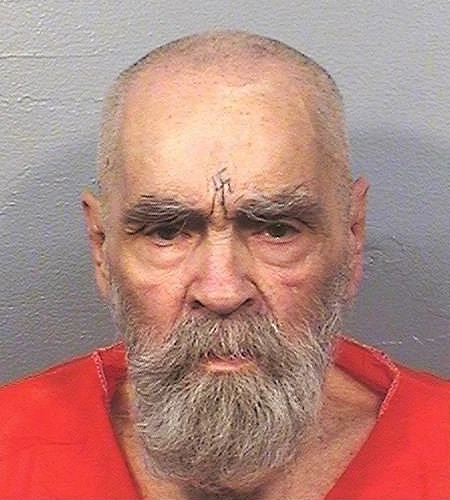
Net worth at death: the direct answer and key figures

Manson died on November 19, 2017, at the California Health Care Facility in Stockton. At the time of his death, his documented personal assets were modest by any standard. The figure most commonly cited by net-worth aggregators is $400,000, and that number does appear to sit within the realistic floor of reporting. Fox News and The Independent both covered the California probate dispute and reported that the estate could be worth up to $1 million, with the higher end driven largely by the ongoing revenue potential from song royalties and likeness/image rights, not from cash holdings or real property.
Here's what that range actually reflects: Manson held intellectual property interests, including rights tied to songs he wrote (some recorded by the Beach Boys and others), along with memorabilia, artwork he produced while incarcerated, and whatever physical possessions remained after decades in prison. Physical possessions alone would be worth very little. The royalties and image rights are what push the ceiling toward seven figures, but those are contingent valuations that depend on future licensing and royalty income, not current liquidated value.
| Source | Estimated Estate Value | Notes |
|---|---|---|
| Celebrity Net Worth aggregator | $400,000 | Commonly cited floor estimate; not a probate document |
| Fox News (probate battle reporting) | Up to $1 million | Based on California probate litigation reporting |
| The Independent (UK reporting) | $400,000 to $1 million | Notes value may be boosted by song/image rights |
The honest answer is that a precise, court-verified number has never been released publicly in a way that's easily accessible. California probate inventories are filed with the court but are not automatically published online, which is one reason different sources land on different figures.
Why "current net worth" doesn't apply to a deceased person
When someone dies, their personal net worth stops being a live figure. There's no updating balance sheet. What exists is an estate, which is a legal entity managed through probate. Any article or site claiming to tell you Charles Manson's "current net worth" in 2026 is either recycling a historical estimate from around the time of his death or confusing estate value with personal net worth. They're not the same thing.
Net worth, in the financial sense, is assets minus liabilities measured at a specific point in time. For a living person, that changes daily. For a deceased person, the relevant calculation happens once: at the date of death, for probate purposes. After that, the estate's value changes as debts are paid, assets are sold or distributed, and any ongoing income (like royalties) flows in and then out to heirs or creditors. So if a website tells you Manson's net worth is $400,000 today, what they mean is that was the approximate value of his estate at death. It's not a current figure in any meaningful sense.
Charles Manson estate net worth: separating estate value from personal assets

The probate process in California, which governs how Manson's estate was handled, is a court-supervised system for identifying assets, paying debts and taxes, and distributing what's left to rightful heirs. Under that framework, "estate gross value" and "personal net worth at death" are related but distinct concepts. Gross estate value is everything the deceased owned before subtracting debts, taxes, legal fees, and restitution obligations. What's left after those deductions is the distributable estate, which is what heirs actually receive.
In Manson's case, the estate was particularly complicated. There were competing claimants, a disputed will (reportedly written in favor of pen pal Michael Channels), and questions about whether a valid will even existed. TMZ reported that Jason Freeman, identified as Manson's grandson, filed probate documents shortly after the death while Manson's body remained unclaimed. The Los Angeles Times reported that a judge ruled in favor of Jason Freeman regarding Manson’s remains and reiterated that the same parties were battling over the estate in Los Angeles court proceedings probate battle. The Los Angeles County court ultimately took jurisdiction over the probate matter. A judge later determined that Freeman was the son of Charles Manson Jr., which was a key finding for establishing his standing as a potential heir.
The assets themselves fall into a few categories. Physical possessions (belongings from his prison cell, artwork, memorabilia) carry some collector value but are not major assets. The more significant and harder-to-value items are the intellectual property rights: royalties from songs, licensing rights to his image, and potential future earnings from documentaries or licensed content. The Independent specifically flagged that the estate's value may be substantially driven by those rights, which is why the ceiling estimate reaches $1 million while the floor sits closer to $400,000.
What's verifiable: sources, records, and why numbers vary
The core problem with pinning down a hard number is that primary source documents, specifically the probate inventory and appraisal filed with the Los Angeles Superior Court, are not published in a publicly accessible online database. California courts are clear that they do not maintain a public list of probated property. That means the authoritative document confirming each asset and its appraised value as of the date of death exists in a court file but requires a direct records request or in-person case lookup to access.
Under California probate rules, an initial inventory and appraisal must list all known estate property and assign values as of the date of death. That filing is the gold standard for estate valuation, but it's also the document most people asking about Manson's net worth have never seen. What they've seen instead is secondary reporting from journalists who either reviewed portions of the court file or relied on party statements made during the litigation.
There's another complication worth flagging: not every court case involving the name "Manson" is related to Charles Manson's estate. Federal court dockets, for example, include unrelated civil litigation under that name. Readers doing their own research need to confirm they're looking at the correct Los Angeles County probate matter, not a similarly captioned case in another jurisdiction or a different era entirely.
There's also the question of restitution and asset constraints. Federal guidance on restitution and asset forfeiture makes clear that court-ordered restitution can be satisfied from a deceased person's assets, and those obligations reduce what's available for distribution to heirs. Whether Manson had outstanding restitution orders that applied to his estate would affect the net distributable value, and that's a detail that public reporting hasn't resolved cleanly.
Family questions: clarifying 'Jr' and grandson and what's publicly known

Two search queries come up frequently alongside Manson's own net worth: "Charles Manson Jr. net worth" and "Charles Manson grandson net worth." Here's the family structure as documented in court proceedings and news reporting. Charles Manson had a son named Charles Manson Jr. (also known as Jay White), who changed his name to distance himself from his father and died by suicide in 1993. Jason Freeman is the son of Charles Manson Jr. and is therefore Manson's biological grandson. Freeman was one of the primary claimants in the probate dispute, and a judge confirmed his identity as the son of Charles Manson Jr. as part of the heir-determination process.
As for net worth figures: there is no publicly documented net worth for Charles Manson Jr. He died in 1993 with no publicly known estate or assets that generated news coverage. Jason Freeman, the grandson, is a private individual, and his personal net worth is not a matter of public record. Any figure you see attributed to either of them online is speculative in the extreme. Freeman's public profile is connected almost entirely to his role in the estate litigation, not to any independent wealth. Whether he ultimately received a distribution from Manson's estate, and in what amount, has not been reported publicly in a way that allows for a credible net-worth estimate.
It's also worth noting that Manson had other documented children. Michael Brunner (known as "Pooh Bear") was another claimant in the probate matter. Manson also reportedly had a son named Charles Luther Manson. None of these individuals have publicly documented net-worth figures tied to any estate inheritance from Manson's probate proceedings. The litigation was ongoing for years and the final distribution, if any has occurred, was not widely reported.
How to check and validate any Charles Manson net worth claim
If you want to go beyond what's in this article and check any specific figure you've seen cited, here's a practical methodology. The first thing to do is identify what type of source you're looking at. Net-worth aggregator sites use editorial estimates based on secondary reporting; they are useful for ballpark figures but not for precise verification. Mainstream news outlets (The Independent, Los Angeles Times, Fox News) are more reliable because they typically describe what documents or court proceedings they're drawing from, even if they don't reproduce the documents directly.
- Search the Los Angeles Superior Court case access system for the Charles Manson probate matter. The probate case would have been filed in Los Angeles County after his death in 2017. Court documents including the inventory and appraisal are the most authoritative source for estate value at death.
- Check whether the specific figure you've seen is described as a 'gross estate value,' a 'net distributable amount,' or simply a net worth estimate. These mean different things and are rarely interchangeable.
- Look for whether the source distinguishes between physical assets and intellectual property rights (royalties, image rights). A source that lumps these together without explanation is giving you less useful information.
- Cross-reference against at least two mainstream news outlets that covered the probate litigation, particularly the Los Angeles Times coverage from 2018 onward, which includes judge rulings and heir identity determinations.
- Be skeptical of any figure described as Manson's 'current net worth' in 2024, 2025, or 2026. That language is either careless or misleading; the relevant figure is net worth at death in November 2017.
One broader point worth making: researching deceased figures' wealth is genuinely harder than researching living celebrities, because estates go through legal processes that generate documents not always available online. For comparison, researching someone like Charles Mingus's estate and financial legacy involves similar challenges around royalty income and posthumous rights valuation. The same methodology applies: prioritize probate records over aggregator estimates, distinguish gross estate from net distributable value, and flag where reporting relies on party statements versus court documents.
If you're researching the Manson family's broader financial footprint, note that none of the key figures in his orbit had documented personal wealth of any significance. There are no credible public figures for relatives or associates that would change the overall picture. Some celebrity wealth comparisons might look at entertainment figures from the same general cultural era, such as the documented net worth of performers like Mitzi and Charlie Brill, who were active in the same late-1960s entertainment landscape, to put the scale of Manson's assets in context. The contrast is illustrative: working entertainers from that period accumulated far more conventional wealth than Manson ever did.
For readers interested in how musician estates handle intellectual property royalties as a major component of post-death valuation, the framework that applies to Manson's song rights is similar to what governs other musician estates. A useful parallel comes from looking at how a tribute artist like Marshall Charloff builds income from music performance rights, which illustrates how royalty structures and licensing work at a basic level, even if the scale and context differ significantly from an estate dispute.
The same caution about name confusion that applies to court records applies to net-worth research generally. Searching "Charles Manson net worth" without careful filtering can surface results about unrelated individuals. A similar disambiguation challenge comes up when researching someone like Charles Mizon's net worth, where name overlap with more prominent figures can muddy search results. Always confirm the full identity and biographical context before treating any figure as accurate.
For context on how private family members of notable public figures are profiled financially, the general rule is that unless a person has an independent public career or documented estate proceedings, no credible net-worth figure exists. That applies directly to Jason Freeman and Charles Manson Jr. A good illustration of this principle is how researchers approach relatives of notable figures, such as Mingus Reedus's net worth as the child of a celebrity, where independent career activity and public records are what make a credible estimate possible. Without that, any number is a guess.
One more thing worth flagging for thoroughness: some researchers trying to track down Manson estate details end up looking at guitar or amplifier-related searches given Manson's known interest in music and instruments. That's a different rabbit hole entirely, but if you're curious how niche instrument valuations factor into estate appraisals more generally, the story of Randall Smith's work building Mesa Boogie and his resulting net worth is a good example of how instrument-related intellectual property and brand value gets appraised, though that's a very different financial profile than what applies to Manson's estate.
The bottom line on Manson's wealth
Charles Manson died with an estate valued somewhere between $400,000 and $1 million, with the most commonly cited floor figure being $400,000. The higher end of that range is driven by intellectual property: song royalties and image rights that have commercial value well beyond his death. His personal liquid assets and physical possessions were modest. The probate dispute was long, complex, and involved multiple competing claimants whose identities had to be verified through DNA testing and document analysis. No clean, court-confirmed final distribution figure has been made publicly available in a way that resolves the range definitively. Any figure you see online should be understood as an estimate within that $400,000 to $1 million window, not a verified balance sheet number.
FAQ
Is the $400,000 figure Manson’s verified net worth from probate?
No. The $400,000 number is best treated as a commonly reported estimate for estate value at death, not a public probate total. A fully verifiable figure would require seeing the filed inventory and appraisal, which are typically not posted online in a readily searchable way.
Why do some sites claim a different number years later, like “in 2026”?
Because they are mixing up estate value at the date of death with “current net worth” language used for living people or continuously valued businesses. For a deceased person, the relevant accounting point is the probate date of death, while later changes occur as royalties come in, debts get paid, and assets are distributed.
How do song royalties and image rights affect the estate valuation?
They can drive the high end because they represent licensing and future revenue potential, not cash in hand. Appraisals for intellectual property often rely on assumptions about how much will be earned, over what time period, and at what licensing rate, so two appraisals can produce different totals.
Do physical possessions (artwork, memorabilia, prison belongings) meaningfully change the estimate?
Usually not much compared with intellectual property. Collector value for memorabilia and artwork can vary widely, but physical items are typically smaller relative to royalty and likeness related rights that can be commercialized after death.
What would a “gross estate” number mean versus the “net” amount heirs might receive?
Gross estate is the total value of assets before subtracting obligations. Net distributable value is what remains after debts, taxes, legal expenses, and restitution related obligations are accounted for, so a headline figure can overstate what heirs actually got.
Could restitution or debt reduce what heirs received even if the estate looked valuable?
Yes. Even if intellectual property creates apparent valuation, court-ordered restitution and other liabilities can reduce the distributable amount. Public reporting may not always spell out how much was satisfied from the estate versus other sources, which is one reason final payouts can be hard to quantify.
How can I make sure I am looking at the correct probate case and not a similarly named court matter?
Check jurisdiction and docket context. The relevant matter is the California probate proceeding connected to Manson’s death and estate administration, not unrelated “Manson” civil litigation in federal or other state courts.
Is Charles Manson Jr. believed to have a publicly known net worth?
No credible public net-worth figure is generally available for Charles Manson Jr., because private individuals without ongoing, well-documented financial activity typically do not have verified wealth reporting. Any amounts you see online should be treated as speculation unless tied to specific records or documented valuations.
Did Jason Freeman’s identity as Charles Manson Jr.’s son come from probate findings, and does that affect valuation?
The standing issue (who could inherit) is separate from the estate valuation. DNA and document review can establish who qualifies as an heir, but it does not automatically confirm how much each heir ultimately received, since distributions depend on the resolved estate inventory, liabilities, and final court orders.
Why can’t someone easily find the definitive court inventory and appraisal online?
Because California probate filings are not reliably available through an automatically published online database for the public. Access usually requires a records request or in-person case lookup, so many readers rely on secondary reporting that summarizes parts of the record.
If I want to verify a number I saw online, what is the best next step?
First, determine whether the number is labeled as estate value at death or “net worth today.” Then, look for reporting that explicitly references probate inventory, appraisal, or court proceedings, because those are closer to primary-source support than generic net-worth aggregator methodology.