Chris Vermeulen's net worth as of May 2026 is estimated in the range of $3 million to $6 million USD. That range reflects his career earnings as a professional motorcycle racer across MotoGP and WorldSBK, prize money, sponsorship deals, and post-racing business activity, offset by the relatively modest scale of top-tier motorcycle racing compared to Formula 1 or major team sports. Because much of his financial life is private, this is a researched estimate rather than a confirmed figure, and this article explains exactly how we arrived at it. If you meant Chris Maguire specifically, his Etsy net worth would need a separate, Etsy-focused income and asset review rather than using this motorcycle-racing profile.
Chris Vermeulen Net Worth: Evidence-Based Estimate and Breakdown

Marcus Rothstein
16 May 2026
Who is Chris Vermeulen (and who he's not)

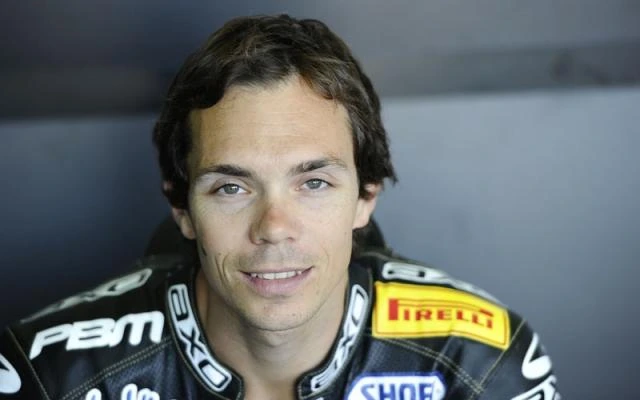
Chris Vermeulen is an Australian professional motorcycle racer born June 19, 1982, in Brisbane, Queensland. He's the Chris Vermeulen most people searching this name are looking for: a genuine world-level competitor who won the blank" rel="noopener noreferrer">2003 World Supersport Championship and, perhaps most memorably, the 2007 MotoGP French Grand Prix at Le Mans while riding for the Rizla Suzuki team. He also has an official rider profile on the WorldSBK website (rider ID 876), reflecting his participation in World Superbike seasons.
The disambiguation matters here. There are other people named Chris Vermeulen, including business professionals and academics, who appear in search results. If you're researching a Chris Vermeulen in finance, real estate, or academia, this article won't apply. This estimate should not be confused with other search results for similarly named racers, including Chris Mazdzer net worth queries. Everything below is specifically about the Australian MotoGP and WorldSBK racer.
What "net worth" actually means and how we estimate it here
Net worth is a straightforward concept: total assets minus total liabilities. Assets include cash, investments, property, business equity, vehicles, and other holdings with measurable value. Liabilities include mortgages, loans, taxes owed, and other debts. What you're left with after subtracting the two is net worth.
For public figures like athletes, exact figures are rarely disclosed. This site estimates net worth by aggregating publicly available evidence: reported salary and contract figures, prize money records, sponsorship deal disclosures, property records, business filings, and credible media coverage. This is why searches like chris messina net worth can still be answered with a defensible range when exact numbers are not public, using the same publicly available evidence approach described here. When a specific figure isn't public, we use comparable data from peers at similar career levels and flag those assumptions explicitly. The goal is a defensible range, not a made-up single number.
Career income: where the money came from
Vermeulen's income-generating career spans roughly two decades of professional motorcycle racing, from junior categories in Australia through to WorldSBK and MotoGP. The major income categories are rider salaries, race bonuses and prize money, and sponsorship and endorsement deals.
MotoGP and WorldSBK salaries
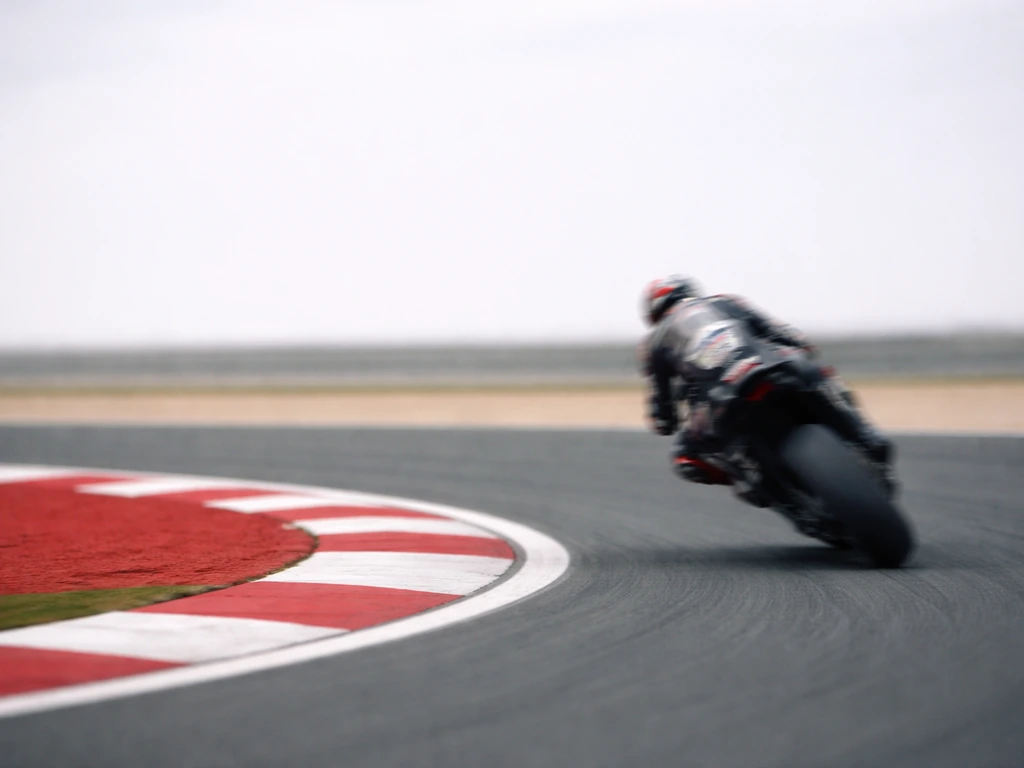
MotoGP rider salaries vary enormously depending on team and tier. At his peak with Rizla Suzuki in the mid-2000s, Vermeulen was a factory-supported rider. Mid-grid MotoGP riders at factory satellite teams during that era typically earned between $500,000 and $2 million per year, depending on performance bonuses and contract length. Vermeulen's 2007 French GP win almost certainly included a performance bonus on top of his base salary. WorldSBK salaries at competitive factory or semi-factory level are generally lower than MotoGP, typically ranging from $200,000 to $800,000 annually for established internationals during the 2000s and 2010s.
Sponsorship and endorsement income
Professional motorcycle racers at the world championship level carry personal sponsorship alongside team deals. These arrangements, which can include equipment, apparel, travel, and direct cash payments, are rarely disclosed but are a meaningful secondary income stream. Rizla (Imperial Tobacco's brand) was the title sponsor of his MotoGP team, which typically means riders have additional contractual obligations and, in some cases, personal endorsement bonuses built into broader team agreements.
Post-racing income
Vermeulen retired from top-level competition, but former MotoGP and WorldSBK champions often continue earning through coaching, race schools, corporate appearances, media commentary, and brand ambassador roles in the motorsport and powersports industries. These post-racing income streams are smaller than peak competition earnings but can sustain meaningful annual cash flow for well-known riders.
Asset inventory: what he likely owns
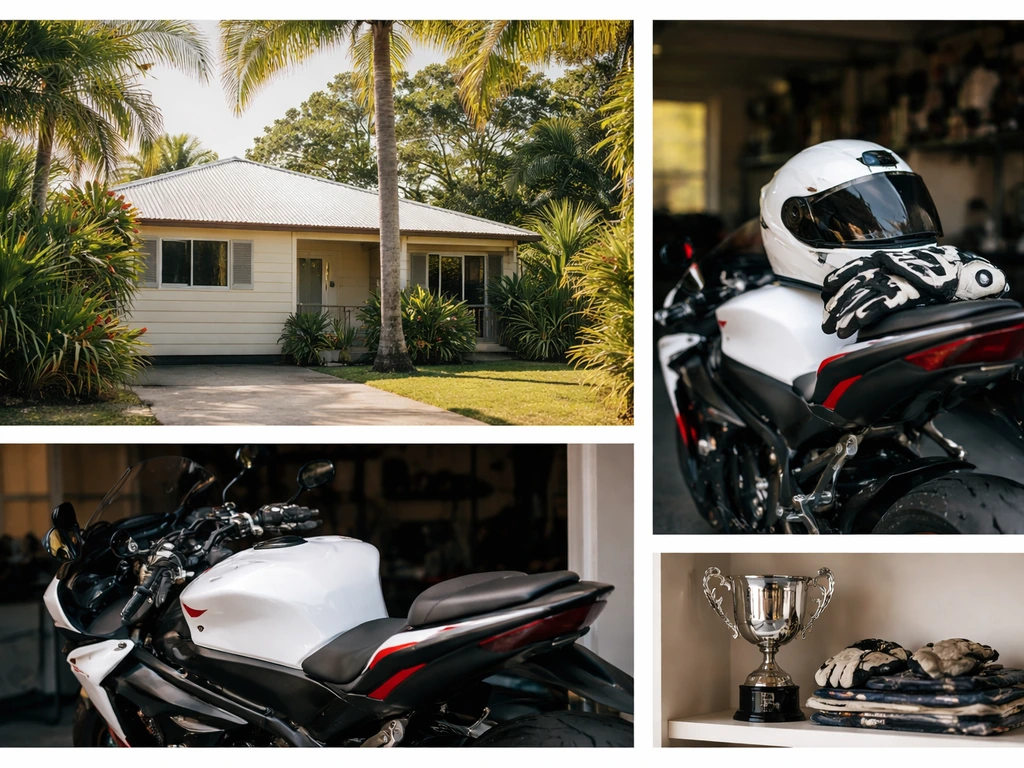
Specific asset records for Vermeulen are not publicly available in the way they would be for, say, a listed company executive or a US-based celebrity with tabloid-level coverage. Based on career trajectory and publicly observable data points, the most probable asset categories are as follows.
- Real estate: A property or properties in Australia (most likely Queensland, given his Brisbane origins) is the most probable significant asset. Australian residential property, particularly in Queensland, has appreciated substantially over the past decade, making even a modest property portfolio a meaningful contributor to net worth.
- Savings and investment accounts: A career spanning multiple world championship seasons at factory level would have generated enough cash flow to support standard investment in superannuation (Australia's compulsory retirement system) and potentially additional personal investment accounts.
- Motorsport-related business interests: Many former top-level racers maintain involvement in the industry through training academies, dealerships, or consulting arrangements. Whether Vermeulen has formal business equity in any such venture is not publicly documented.
- Vehicles and collectibles: As a motorcycle racer, it's reasonable to assume ownership of personal motorcycles and possibly memorabilia, though these are minor contributors to total net worth.
- Intellectual property and media: Any licensing of his name, likeness, or race footage for commercial use represents a modest but real asset category.
Liabilities and adjustments to the gross figure
Gross asset value needs to be reduced by any debts or obligations to arrive at true net worth. For someone of Vermeulen's profile, the most relevant liabilities are likely a mortgage on a primary residence (if property is owned rather than held outright), any business loans if motorsport ventures required startup capital, and ongoing tax obligations. Australian residents are subject to income tax at progressive rates up to 45%, meaning career earnings during peak MotoGP years would have been substantially reduced at source. A professional at his income level would also have had financial and legal advisors, whose fees represent ongoing costs.
Without specific debt disclosures, the standard approach is to assume a mortgage-to-equity ratio consistent with Australian property ownership norms and to model tax obligations against the known career timeline. These adjustments push the net figure down from a peak gross asset estimate, which is reflected in the range below.
The net worth estimate today: range, confidence, and reasoning

| Component | Estimated Contribution | Confidence Level |
|---|---|---|
| Career race salaries (MotoGP + WorldSBK) | $3M – $8M gross over career | Moderate |
| Sponsorship and bonus income | $500K – $2M over career | Low-Moderate |
| Post-racing income (coaching, media, appearances) | $100K – $500K cumulative | Low |
| Real estate equity | $500K – $1.5M | Low-Moderate |
| Investments and superannuation | $300K – $800K | Low |
| Total liabilities (mortgages, taxes, costs) | ($1M – $3M) | Moderate |
| Net worth estimate | $3M – $6M | Moderate |
The most defensible single-point estimate within this range is approximately $4 million to $5 million, based on a career that included genuine factory MotoGP status, a world championship title, a Grand Prix win, and a decade-plus at the top level of motorcycle racing. The lower end of $3 million accounts for the possibility of significant tax drag on Australian income, conservative property appreciation, and limited post-racing commercial activity. The upper end of $6 million applies if real estate holdings have appreciated strongly and post-racing business activity has been more substantial than publicly visible.
Confidence in this range is moderate. Motorcycle racing at the MotoGP level is well-documented in terms of team structures and general salary bands, but individual rider contracts are private. Vermeulen has not made public statements about his finances, and no investigative reporting or court records have disclosed specific figures. The range is narrower than it would be for a more obscure figure because his career arc and earnings tier are well-established.
How to verify and update this figure yourself
If you want to check this estimate independently or stay current as new information emerges, here's a practical approach.
- Start with official racing records: WorldSBK's official site (including Vermeulen's rider profile, ID 876) and the MotoGP archive document his race wins, championships, and team affiliations. These establish his career tier, which anchors the salary estimate.
- Cross-reference salary band data: Motorsport publications like Motorsport.com, MCN (Motor Cycle News), and specialist race salary roundups periodically report earning bands for MotoGP and WorldSBK riders by tier. Match Vermeulen's documented team and era to those bands.
- Check Australian property records: Australian state land registries (in Queensland, this is the Titles Queensland registry) allow property ownership searches by name for a small fee. This can confirm real estate holdings and mortgage encumbrances.
- Search ASIC (Australian Securities and Investments Commission): ASIC's public register documents company directorships and business registrations in Australia. Searching 'Vermeulen' can surface any formally registered business entities.
- Monitor credible motorsport media: Autosport, Crash.net, and GPOne regularly cover rider careers including commercial and business developments. Set a Google alert for 'Chris Vermeulen' filtered to recent dates.
- Avoid aggregator sites without sourcing: Many celebrity net worth sites publish figures without citing sources. If a figure appears without an explanation of how it was calculated, treat it with skepticism. The presence of a number is not the same as a verified number.
- Watch for disambiguation errors: Always confirm any new source is referring to the Australian motorcycle racer, not another Chris Vermeulen. Check for keywords like 'MotoGP', 'WorldSBK', 'Brisbane', '2003 World Supersport', or '2007 French Grand Prix' to confirm identity.
How this estimate compares over time
Vermeulen's peak earning years were roughly 2003 to 2010, covering his World Supersport title, his MotoGP stint with Rizla Suzuki, and his subsequent WorldSBK campaigns. His net worth would have been accumulating most rapidly during this period. Since stepping back from top-level competition, the growth rate of his net worth has likely slowed significantly, shifting to asset appreciation (primarily property) and smaller active income streams rather than large race contracts. In that sense, his financial profile today is more stable and passive than it was during his competitive prime, which is typical for athletes who retire from high-earning sport in their 30s.
Compared to other athletes profiled on this site, Vermeulen's net worth sits in a range that reflects the realities of motorcycle racing's commercial scale. MotoGP and WorldSBK generate substantial global audiences but have not historically matched Formula 1 or Premier League football in terms of individual athlete earnings. His net worth is comfortably above the median for professional athletes globally, but well below the nine-figure figures associated with the very top tier of motorsport or team sports.
The bottom line
The best available estimate for Chris Vermeulen's net worth as of May 2026 is $3 million to $6 million USD, with the most probable figure sitting around $4 million to $5 million. This reflects a legitimate world-championship-level motorcycle racing career, documented major wins, and the typical financial outcomes for athletes at his tier after accounting for taxes and post-career income patterns. The figure is based on transparent assumptions tied to public career data, not speculation. If you want to pressure-test it, the methodology above gives you the exact steps to do so using publicly accessible records.
FAQ
Is the $3 million to $6 million range USD or Australian dollars, and could exchange rates change the answer?
The range is presented in USD. If you translate to AUD, the value will move with exchange rates, but the underlying asset base (property, business equity, and investments) is what matters. For a fair comparison, keep the same currency when you pressure-test the estimate, and convert only at the final step.
How much of Chris Vermeulen’s net worth is likely tied to property versus business or investments?
Given the absence of public asset disclosures, the most probable large, steady component is Australian residential real estate (often the biggest asset class for high earners after retirement). Business equity and investments are possible, but they are less likely to be the majority without visible company filings or publicly documented ventures.
What would have to be true for his net worth to hit the $6 million upper end?
Reaching the high end typically requires at least two things: substantial real estate appreciation after retirement and either (1) ongoing, measurable post-racing income (coaching, race school, durable brand partnerships), or (2) ownership stakes in a motorsport or powersports-related business that performed well. Without those signals, the estimate usually clusters closer to the middle of the range.
What’s the biggest reason this kind of estimate can be wrong?
The main error source is hidden liabilities or unreported asset ownership. For example, if he has a larger mortgage, tax assessments, or partner guarantees not reflected in public records, net worth would be lower than projected. Conversely, off-market business interests could push it higher.
Does winning a MotoGP Grand Prix automatically imply much higher long-term wealth?
Not automatically. A Grand Prix win can boost a rider’s contract leverage and sponsorship value, but long-term net worth depends more on multi-year earnings, consistent performance, and smart post-retirement decisions (property acquisition, investing, stable income streams) than on one-off prize money.
How do sponsorships and team deals affect net worth when sponsorship terms are private?
Sponsors can meaningfully increase cash flow, but because the exact terms are rarely public, net worth estimates treat sponsorship as a range add-on rather than a fixed number. A practical way to pressure-test is to compare with sponsorship intensity of similarly placed riders during the same era, then adjust for whether the rider remained a headline name afterward.
Could coaching, race schools, or media work change his net worth more than assumed?
Yes, especially if post-racing roles became equity-based (for example, ownership in a training program) or recurring-retainer partnerships with brands. If the work is mostly episodic paid appearances, the impact on net worth is smaller and the main growth still comes from asset appreciation.
Does the estimate assume he invested most of his peak earnings, or could he have spent heavily during the racing years?
It implicitly assumes a typical high-income pattern for elite athletes after taxes, meaning not every dollar was preserved but a meaningful portion likely went into savings, property, and investment. If there was unusually high personal spending (lifestyle, multiple financed purchases, large family obligations) without offsetting investment growth, net worth could skew toward the lower end.
How should I handle disambiguation if I’m searching for other people named Chris Vermeulen?
Use the career anchors: “MotoGP,” “WorldSBK,” “Rizla Suzuki,” and the Brisbane, Queensland bio details. If the search results reference finance professionals, academics, or Etsy sellers, those are different individuals and should not be merged into the same net worth model.
Can I independently verify parts of the estimate with public records?
You can often verify secondary inputs like property transactions (where accessible), business registrations, or company directorships if available through local registries. Those checks are most useful for validating liabilities and ownership, not for confirming day-to-day income.
Is $3 million to $6 million realistic compared with other MotoGP or WorldSBK riders from the same era?
It’s broadly consistent with what’s typical for mid-to-upper tier riders who had factory-level exposure but are not in the very top salary bracket for many seasons. The range reflects that motorcycle racing’s pay scale is generally lower than the highest tiers of Formula 1 or major team sports, even for successful champions.